When it comes to choosing a surfboard, the question is often not just "how many litres?", but what type of board do I really need?
Twin fin, fish, shortboard, midlength: each model is designed for a different way of surfing the wave. Understanding the differences between these families of shapes means avoiding bad purchases and, above all, catching more waves in the conditions we surf most often. There is no such thing as the best category overall. There is the one that best suits your level, your style and the waves you find at your spot.
Twin fin: speed, fluidity... but not for everyone
The twin fin is a board with two fins, created in the 1970s and now back in vogue. Its main feature is its immediate speed and ability to glide over the wave with great fluidity. The lines it traces are wide, round and less vertical than a shortboard, inviting you to surf with rhythm and continuity. It is a very fun board, but it is not suitable for everyone. Those who are not used to this type of shape may find it difficult to keep it stable in turns or in more powerful waves. For this reason, there are 'twin + stabiliser' (2+1) variants, which add a small central fin. This modification offers greater control and stability, making the board more accessible to those who want to try twin fins without sacrificing safety in the water. In general, the twin works particularly well in clean medium waves, in beach breaks that are not too powerful, and for those who want to focus on flow and reading the line. It is an excellent choice for intermediate surfers looking for fun and fluidity, but in very steep or powerful sections it can be less controllable than a shortboard.
Fish: the more compact and powerful version of the twin
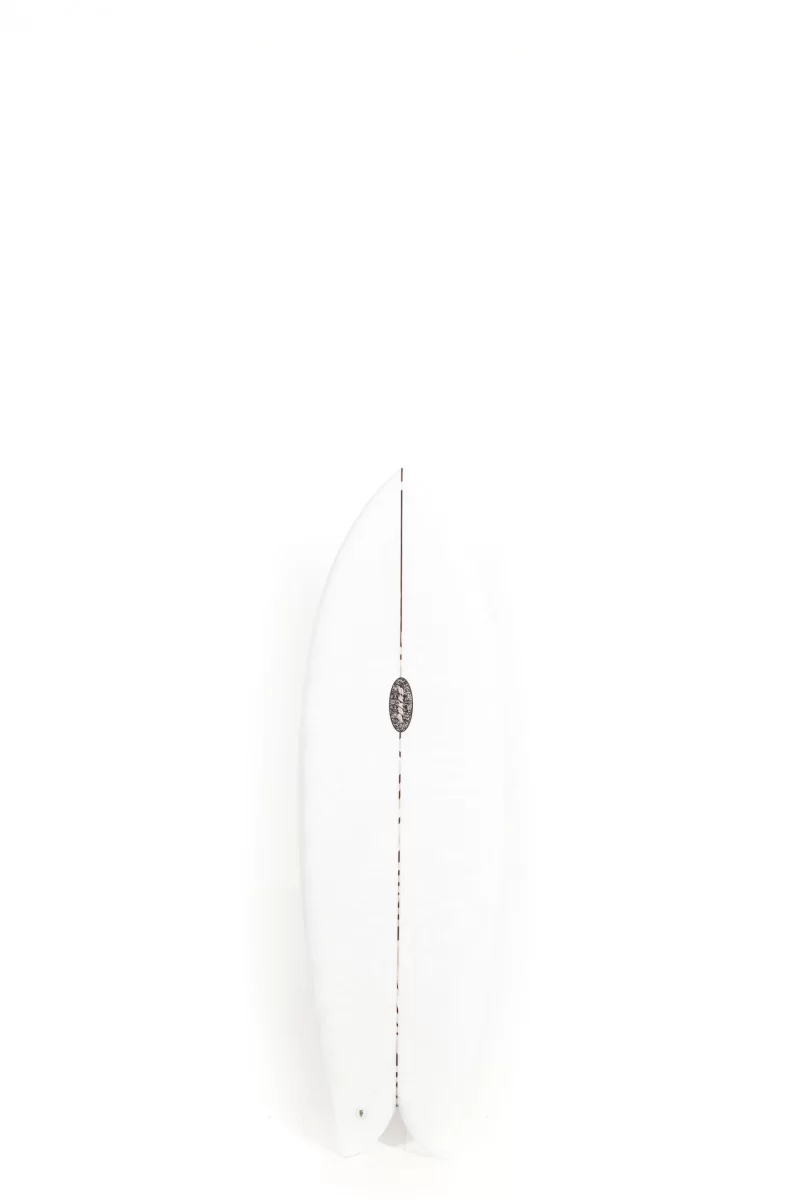
The fish is a variant of the twin, but with specific characteristics: wide outline, generous nose and swallow tail.
It was created for small, low-power waves, but today there are modern fish boards with narrower tails and slightly more pronounced rockers, offering greater responsiveness than pure retro models.
In the water, the fish:
- glides quickly
- maintains speed even in weak waves
- allows for fun and creative surfing
It is ideal for those who often surf small waves and want a board that "helps" generate speed without excessive pumping. However, if the goal is to work on vertical manoeuvres and lip attacks, it may not be the most technical choice.
Shortboard: control and performance
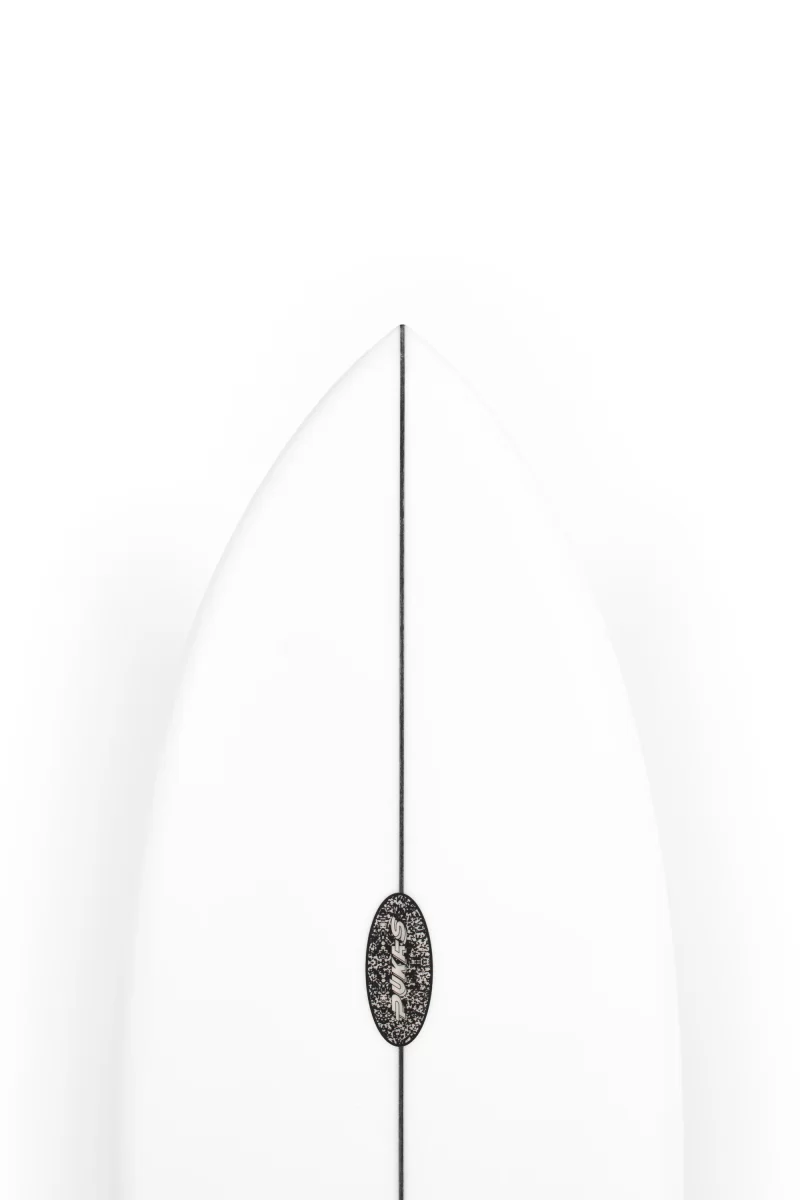
The shortboard, often in thruster configuration, is the benchmark for modern, high-performance surfing.
It offers:
- greater control in turns
- more stability in steep sections
- the possibility of more vertical surfing
If you want to improve your bottom turns, top turns and radical manoeuvres, the shortboard is the most complete tool. It is the natural choice when the waves are powerful and have well-formed walls.
For intermediate surfers, it often represents the technical basis on which to build progression.
It is the board that forces you to work on your technique, but it rewards you with precision and immediate response.
Limitations? In very weak waves, it can be slower than flatter fish boards.
Midlength: balance between ease and control
The midlength is between a shortboard and a longboard, usually between 6'6" and 7'2". It offers more paddling power, more stability and earlier entry into the wave.
This means less physical stress and more waves caught. It is not a 'beginner's' board. It requires clean lines and smooth speed management.
You don't surf it by pumping continuously like a very technical shortboard, but by maintaining continuity and rhythm.
It works well:
- in medium-small but also more solid waves
- for surfers who want to extend their sessions
- for those looking for fluidity rather than extreme radicalism
Many intermediate surfers find it a game changer: less effort, more waves and greater control.
Which one should I really choose?
The right question is not "which one is the best?", but:
- What kind of waves do I surf most often?
- Do I want more speed or more control?
- Am I working on my flow or my radicality?
- How much effort do I want to put in in the water?
Those who often surf small waves will benefit more from flat fish or twin boards. Those who want to improve their vertical technique should get a shortboard. Those looking for balance and continuity may find midlength boards to be a surprisingly effective solution.
Many surfers build their quiver by combining these categories: a fast board for weak waves, a more technical board for good waves, and perhaps a mid-length board for long or variable days.
Understanding the differences means catching more waves
Knowing the differences between twin, fish, shortboard and midlength is not theory. It is pure practice.
Each shape changes the position of your feet, speed control and lines on the wave.
The more you understand how the board works under your feet, the more you adapt. The more you adapt, the more waves you catch. And the more waves you catch, the better you get.
If you are considering a new board, starting with the type of model is often more important than the volume or size itself.
If you want to learn more about this topic, I recommend reading